Full web system · e-commerce + dashboards
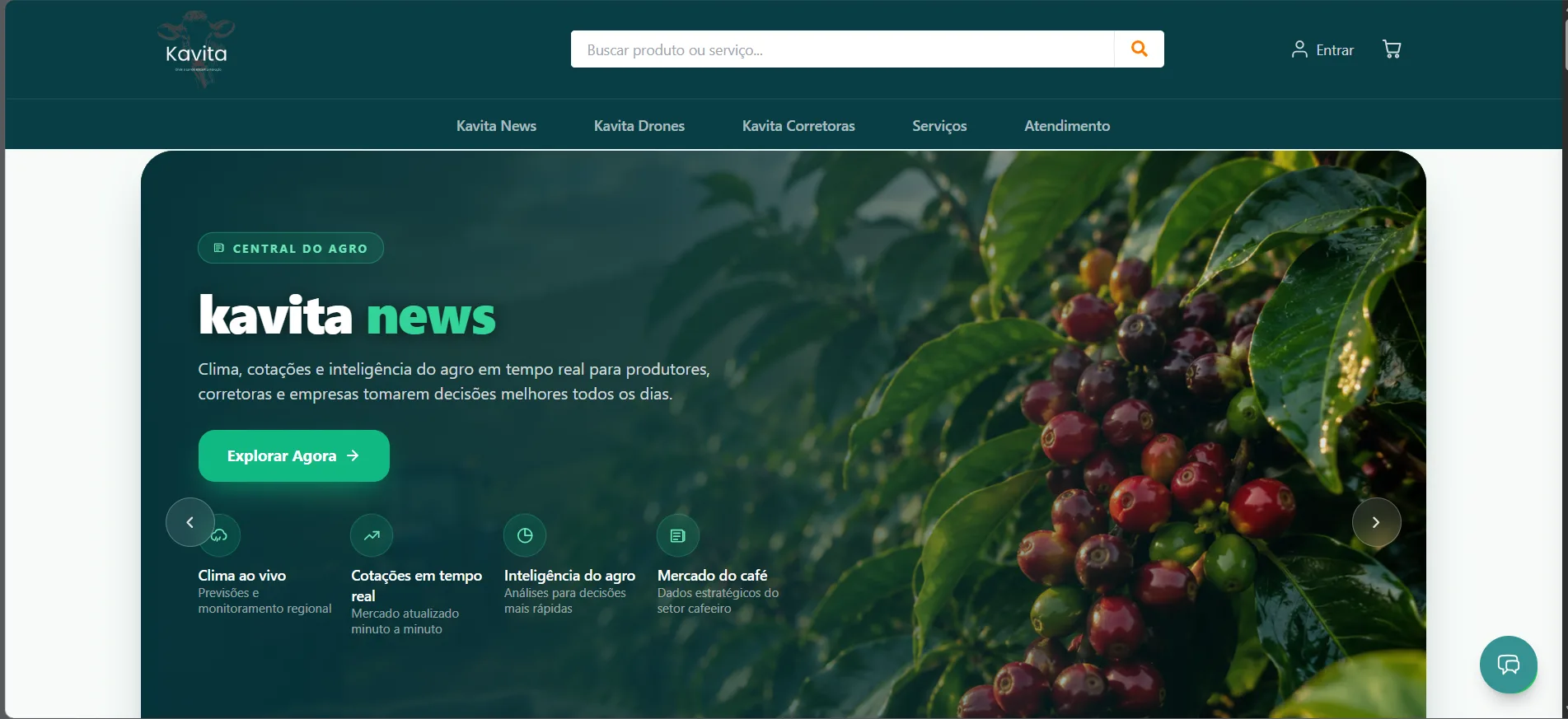
E-commerce do Agro
Problem
An agribusiness needed far more than a store: sales, payments, deliveries and role-based management.
Solution
Platform with store, paid checkout, 5 role-based panels, delivery app and a documented API, covering everything from order to delivery.
It's just a prototype I built to test and sharpen my skills. It isn't a client product.
How it was built
The project is split into two repositories (frontend and backend) that only talk over HTTP, with no cross-imports and no shared package. The backend is a Node.js/Express REST API with a strict layered architecture: thin route, controller, service and repository, no exceptions. Data access uses a raw mysql2 pool, and Sequelize is in the project exclusively to run migrations via CLI (db:migrate, db:status). There isn't a single Model.findAll() in application code: it's direct SQL by a documented, deliberate project decision, so future contributors don't reach for an ORM that isn't there. Every HTTP response follows one contract ({ ok, data, code, message, meta }) and every expected error becomes an AppError caught by a global handler, never a bare res.json() or an inline res.status(4xx).
The domain goes far beyond cart and checkout. There are four fully independent authentication contexts, each with its own HttpOnly cookie, middleware and login endpoint: admin, store customer, coffee broker ("corretora") and rural producer. All four coexist in the same browser, so an admin can enter impersonation mode inside a broker's panel without losing their own session. The producer doesn't even use a password: they sign in via a magic link with an HMAC-signed, short-TTL token, a flow designed for a rural audience with low digital familiarity. On top of the traditional store (products, drones, cart, Mercado Pago checkout) sits an entire B2B module, the "Coffee Market", with an internal 4-role RBAC inside each broker account (owner/manager/sales/viewer), SaaS plans billed through Asaas, and bot protection (Turnstile) on the public lead-capture forms.
Contracts between broker and producer are closed with real electronic signature: integration with ClickSign's v3 API, a webhook validated by an HMAC secret, and a swappable provider set via environment variable (CONTRATO_SIGNER_PROVIDER=stub in staging, clicksign in production). It's one switch instead of stub logic scattered through the code. Security carries real weight on the backend: CSRF via double-submit cookie, adaptive rate limiting with Redis and an in-memory fallback if Redis goes down, and a deliberately non-obvious middleware order in server.js. Helmet sets Cross-Origin-Resource-Policy: same-origin by default, and the override that serves cross-origin media under /uploads has to come after it, or assets simply stop loading from another domain.
On the frontend, Next.js 15 (App Router) separates public data fetching into server-only fetchers under src/server/data/ (RSC, cache: no-store) from anything tied to a user session, which is resolved in Client Components through a custom apiClient that fully replaced Axios. It auto-injects the x-csrf-token header on mutations and centralizes errors as a typed ApiError. Media uploads flow through a single backend mediaService that abstracts local disk, S3 and GCS behind an environment variable, and the frontend never hand-builds an image URL: it always goes through absUrl(), which normalizes whatever path shape the backend returns. Tests cover both sides (Jest and Supertest on the backend with a dedicated test database; Vitest and Testing Library on the frontend). The project is openly a self-study prototype and doesn't run in production for a real client, but it was built with the architectural discipline of a system that would need to scale across multiple brokers and real coffee-producing regions.
Layered, no ORM
Route → controller → service → repository with raw SQL via mysql2; Sequelize only runs migrations via CLI.
4 auth contexts
Admin, store, broker and producer each with their own HttpOnly cookie, coexisting in the same browser, with impersonation.
E-signature via API
Contracts closed via ClickSign v3, HMAC-validated webhook, provider swappable via environment variable.
Embedded B2B marketplace
Coffee Market module with 4-role RBAC per broker and SaaS plans billed through Asaas.
Stack
- Next.js
- Node.js
- Express
- MySQL
- Docker